Companies called her when the numbers got hard
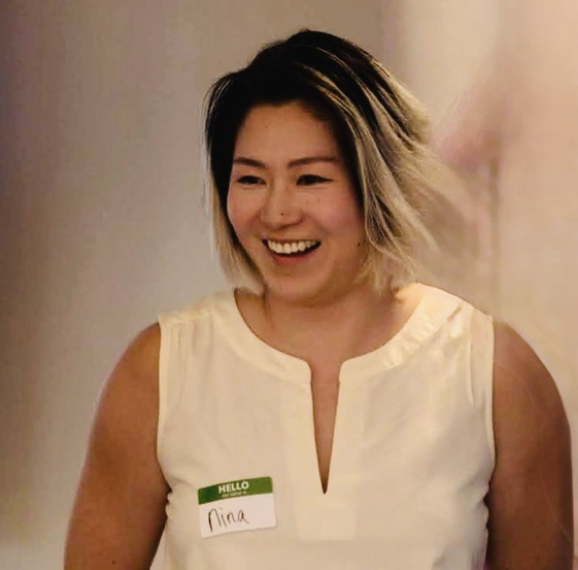
My wife is Nina Zhao, CPA. For more than a decade she has done the work most finance teams postpone until it is on fire: technical accounting and SEC reporting, at Deloitte, EY, and public companies like PagerDuty.
If you have ever been the person who has to turn a messy contract into a defensible memo before filing, you already know her job.
Then I watched her do it with Ctrl+F
One evening she had a complex revenue recognition question: a multi-element SaaS arrangement, the kind that makes even experienced CPAs pause.
She opened a 2,000-page PDF of the ASC Codification on one monitor. She hit Ctrl+F, typed a keyword, scrolled, read, and scrolled some more. She cross-referenced a second PDF, opened a spreadsheet, and started building her memo by hand on the other monitor, paragraph by paragraph.
I come from a world where machine learning serves billions of search results in milliseconds: systems that understand natural language, context, and intent. I was at Google, working on the AI behind Search. And here was one of the most qualified people I know, doing work that sits under every public filing, with the same tools she had as a staff accountant.
I thought: this can't be right.
She did not think it was broken
That is the part that stayed with me. Nina did not come home complaining that the profession had been left behind. She came home and did the work. Close first. Automate later. In technical accounting, there is always another fire.
The pain was so normal it had become invisible. As an engineer, that is the most dangerous kind of problem: the one the experts themselves have stopped seeing as a problem.
So I started asking questions. Controllers. Audit partners. CFOs. The core research workflow had not fundamentally changed in twenty years: keyword search in a PDF, manual memo writing, hours of cross-referencing. Most of them did not expect it could be better.
So I left Google. She became my co-founder.
I could have stayed at Google, building AI for search. It was a good career, and a safe one.
But I could not unsee that evening. This profession stands behind every public filing, every audit, and every revenue recognition decision, and its tools were not built for the complexity being asked of it.
I left, and spent years learning technical accounting from the ground up: ASC 606, ASC 842, ASC 350, the whole Codification. Not to become a CPA. Because software for this profession has to survive the standard of someone who has lived the close, the filing, and the memo. I was married to that person.
Nina shaped TAbot the way a technical accountant actually works. Research that cites the Codification, not a chatbot guess. Contract review that catches the landmine in the "simple" MSA. Memos an auditor can follow. She had produced every one of those artifacts for a living. The product had to survive her.
The product had to survive her.
It was never just her problem
We built TAbot for Nina. Then we put it in front of other technical accountants and watched the same recognition on their faces.
PagerDuty's team cut complex memo drafting from two weeks to two or three days. AppZen's controller went from sixteen hours of technical accounting research to one. WhiteBottle's analyses that took fifteen to twenty hours now finish in under two. The evening in our apartment was not a special case. It was the job.
That is how TAbot was born. Not from a market map. From watching the person I trust most do the hardest work in finance with tools that did not respect her.
Harton Wong, Founder & CEO